The Kalahari is not empty — it is patient. This journal follows the animals that live around its salt pans and fossil riverbeds, where a single waterhole can hold the whole region together for months. Photographs come from free-licence archives and are arranged by place and light.
The most recently added frames
Mike Baird , bairdphotos.com
Rasheedhrasheed
Leyo
Andy Morffew from Itchen Abbas, Hampshire, UK
Byrdyak
Thomas Fuhrmann
Olga Ernst & Hp.Baumeler
Bernard Gagnon
Giles Laurent
Four places, and what the dry season brings to each
A flat crust of salt that glares at noon and turns blue at dusk. Springbok cross it in long lines at first light, and the tracks left overnight tell you who came to the edges while you slept.
A river that has not flowed in living memory, still green along its banks because the water sits a metre down. Gemsbok and hartebeest graze here; the lions follow them.
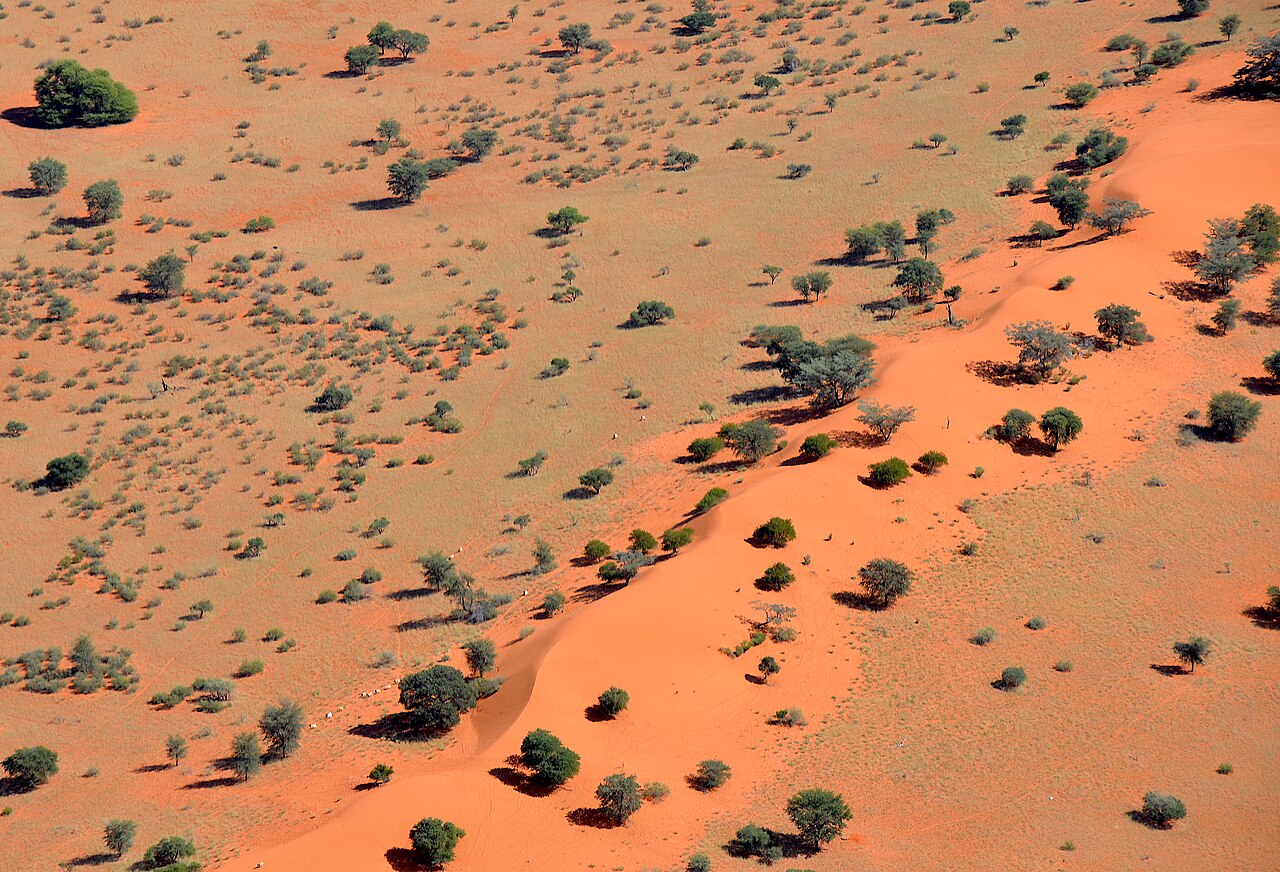
Parallel dunes of iron-red sand, stabilised by grass. Early morning is for meerkats and ground squirrels; late afternoon for raptors riding the heat off the slopes.
Where every path in the region ends by October. Sit downwind, stay quiet, and the procession comes to you: antelope, jackal, then whatever hunts them.
On light, heat, and the discipline of waiting